5 Reasons Foreign Investors Are Choosing El Salvador Over Costa Rica Right Now
For years, Costa Rica was the default answer for anyone looking to put capital into Central American real estate. That’s shifting. More foreign buyers — from US retirees to crypto-native entrepreneurs — are running the numbers on El Salvador and finding the math works better. Here’s what’s actually driving that shift, side by side.
1. A simpler, lower tax bill on the way out
Costa Rica taxes real estate capital gains at a flat 15% on the net profit (properties bought before July 2019 can opt into a 2.25% rate on the sale price instead, but that grandfather clause is aging out). El Salvador’s flat rate is 10%, and there’s no separate annual property tax — Costa Rica charges 0.25% of assessed value every year, which adds up over a hold period. Neither system is complicated once you understand it, but El Salvador’s is simpler to plan around, especially for buyers who don’t want to manage two different tax elections depending on when they bought.

2. No currency risk: it’s dollarized
El Salvador adopted the US dollar as legal tender in 2001. Costa Rica still prices and settles primarily in colones, which means a US or Canadian buyer is exposed to exchange-rate movement on top of the property’s own performance, whether they’re collecting rental income, paying local expenses, or eventually selling. For a buyer thinking in dollar terms, El Salvador removes a variable that Costa Rica simply doesn’t.

3. Faster, simpler bureaucracy
El Salvador has spent the last several years compressing the paperwork side of doing business: business registration times have dropped from roughly 30 days to about 8, and customs clearance has gone from weeks to hours in many cases. Getting a local tax ID as a foreigner is a same-day process. Costa Rica’s registry and municipal processes are reliable, but they’re slower and more layered — and recent changes there (properties now generally need to be held in a personal name rather than a corporation to qualify for residency) have added a step rather than removed one.

4. More flexible paths to residency
El Salvador now offers multiple entry points depending on an investor’s goals: a traditional investment visa route through the National Investment Office, a lower-threshold path for those putting capital into a Salvadoran company, and the higher-profile Freedom Visa/citizenship program aimed at larger crypto and cash contributions. Costa Rica’s residency categories (Rentista, Pensionado, Inversionista) are well-established but come with stricter ongoing requirements, including minimum time spent in-country each year for some categories. Investors who want more flexibility in how they qualify, and how much time they’re required to physically spend there — are finding El Salvador’s menu of options a better fit.

Additionally, many foreign visitors can stay in El Salvador for up to 90 days without obtaining residency (depending on their nationality), giving them time to explore different regions, visit properties, and experience the country before making an investment.
5. Earlier-stage pricing on a coastline that’s building out
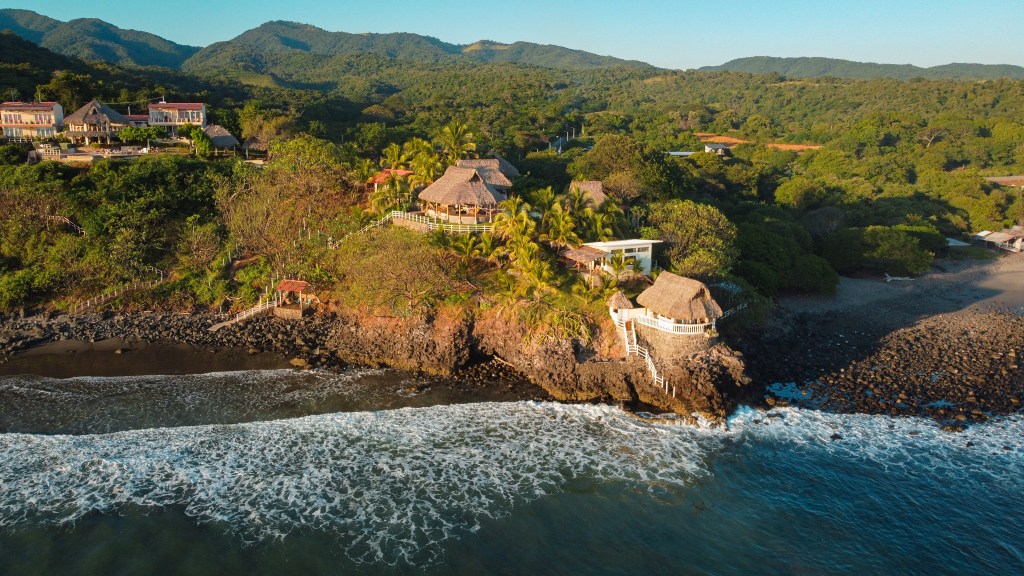
Guanacaste and the Pacific coast of Costa Rica are mature, well-priced markets, the infrastructure is there, but so is the premium. The La Libertad coast in El Salvador is earlier in that cycle: new terminal capacity at the international airport, ongoing road and connectivity upgrades, and a steady influx of cafés, coworking spaces, and short-term rental demand are building the same kind of tourism and lifestyle economy that Costa Rica’s coast had a decade or two ago — at entry prices that reflect an earlier stage of that curve. For investors comfortable with a longer horizon, that gap is the opportunity.
None of this makes Costa Rica a bad market — it remains a stable, well-tested option with its own advantages, including a long track record of foreign ownership protections. But for investors prioritizing tax simplicity, currency stability, faster administrative processes, and room for price appreciation, El Salvador is increasingly winning the comparison.
Thinking about where your capital fits into this? Let’s talk.